How to Read Terrain and Pick a Crawling Line
Better lines beat better gear. Here's how to look at a trail obstacle and figure out the path before your wheels do.
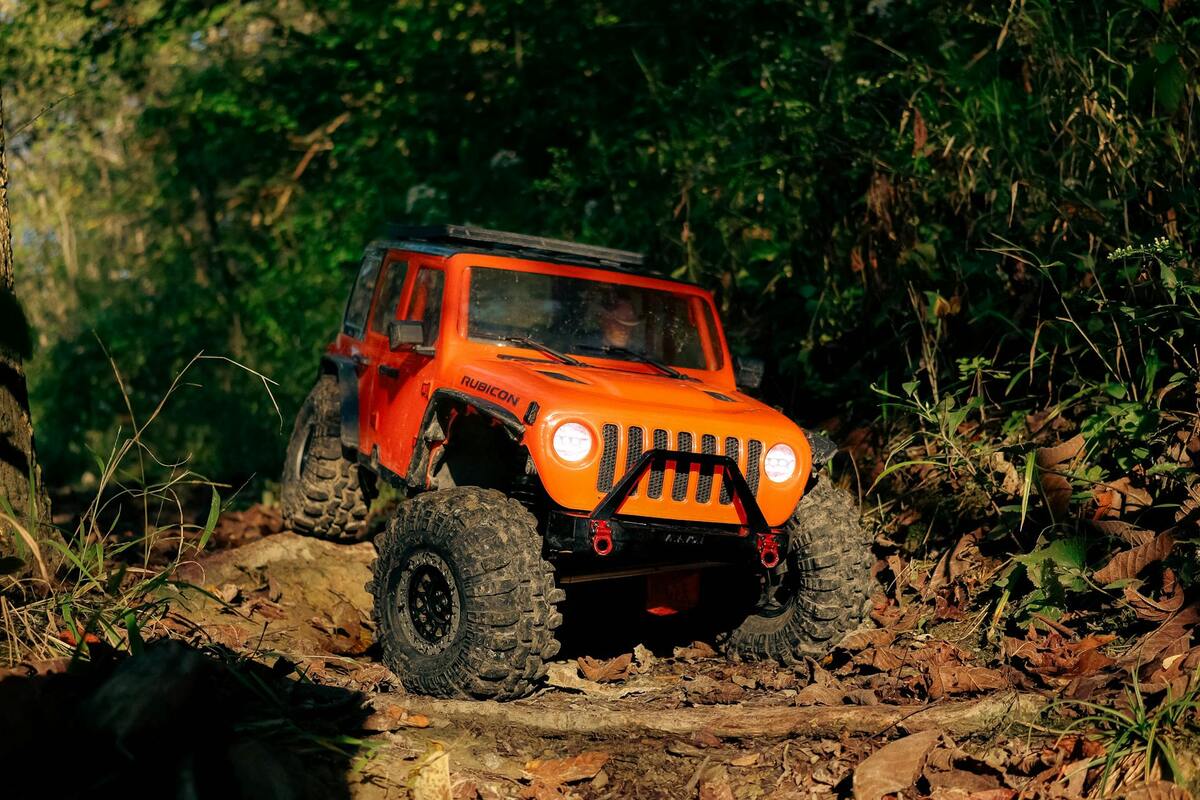
When I got back into RC crawling after a long break, I made the same mistake most people make at the start: I just drove at things and hoped for the best.
Sometimes it worked. More often, the truck tipped, hung up, or stopped dead and I couldn’t figure out why. I’d blame the tires, or the servo, or tell myself I needed brass upgrades. Sometimes that was even true. But a lot of the time, the problem was that I was picking bad lines and not knowing it.
Reading terrain is a skill. It’s learnable, it’s satisfying when it clicks, and it makes a bigger difference than almost any upgrade you can bolt onto the truck.
What “Reading Terrain” Actually Means
When experienced crawlers talk about reading terrain, they mean looking at an obstacle and working out — before driving — which path through it keeps the truck stable, maintains momentum, and doesn’t put the chassis or axles into a bad position.
It’s not that complicated when you break it down. There are a few things you’re always looking for:
- Where are the high points? Rocks, roots, and edges that your tires can actually use as purchase.
- Where are the gaps? Places where a wheel could drop unexpectedly or hang in the air.
- What’s the off-camber angle? How much does the terrain tilt sideways? This matters more than steep forward inclines for most micro crawlers.
- Where does the line exit? You’re not just solving the obstacle in front of you — you’re also setting yourself up for what comes after it.
The more you consciously work through those questions before each obstacle, the faster the analysis becomes automatic.
The Off-Camber Problem
Off-camber terrain — where the surface tilts sideways relative to your truck — is what flips crawlers more than anything else. A truck climbing straight uphill is in a pretty forgiving situation. A truck crossing a surface that tilts it 30 degrees to one side is much closer to tipping.
The fix is to approach off-camber sections at an angle that keeps as many wheels in contact with the ground as possible. On a slope that tilts right, angle your approach so the uphill side tires are doing the work. Try to maintain even weight distribution across all four wheels rather than letting the truck lean fully onto the downhill tires.
On micro crawlers this is especially important because the wheelbase and track width are short. The SCX24 is a compact rig, and it doesn’t take much angle to get it into trouble. One technique that helps: brass weight low in the chassis lowers the center of gravity and makes the truck more forgiving on off-camber surfaces. That’s one reason brass upgrades belong at the top of the upgrade list.
High-Centering and How to Avoid It
High-centering happens when the underside of the truck catches on an obstacle — usually a rock or root — and the wheels lose contact with the ground. Once you’re high-centered, you’re stuck unless you can reverse off or have someone lift the truck.
To avoid it, look for the lowest point of your chassis as it crosses an obstacle. On most micro crawlers, the lowest point is roughly the center of the chassis — the battery tray area. When approaching a raised obstacle, you want your tires to straddle it rather than drive straight over it if the obstacle is too tall.
The tactical move is to straddle obstacles when possible rather than roll over them center-body. Put the rock or root between your left and right tires. Your axles can handle a lot, and the articulation in the suspension is there specifically to let the wheels follow uneven ground while the chassis stays relatively level.
Momentum vs. Control
There’s a constant tension in crawling between using momentum and maintaining control. Too much speed and you lose the ability to pick precise lines. Too little and you stop dead on an incline that you could have climbed with more commitment.
For beginners, the instinct is usually to go fast when things look hard — it feels like momentum will carry you through. Experienced crawlers usually do the opposite: they slow way down on technical sections and let the truck pick its way through.
At low speed, you can:
- See how the truck responds before you’re committed
- Correct steering between steps rather than after you’ve already departed from the line
- Use throttle in short bursts rather than a sustained push that breaks traction
The exception is loose terrain — dirt, gravel, loose rock. On slick surfaces, sometimes a little more speed builds enough momentum to stay on top rather than digging in. But on solid rock and outdoor trail obstacles, slow is usually faster.
Scouting Before You Drive
For anything technical — a rock pile, a steep drop, an unfamiliar section of trail — walk around it before you drive it. Look at it from the side and from the direction you’ll be approaching. Identify where the wheels will land, where the chassis might contact, and where the obstacle exits.
This feels tedious at first. It starts feeling like second nature after a season, and eventually you’re doing the visual scan in a few seconds without thinking about it.
A few things to check during a scout:
- The exit: Is there somewhere to go once you clear the obstacle? A successful climb that drops you immediately into a wall isn’t a win.
- Wheel placement: Where will each tire be at the hardest point of the obstacle? Can you visualize all four wheels?
- The bail option: If you get partway through and things go wrong, is there a way to back out safely, or are you committed once you start?
Steering Inputs: Less Is More
A common mistake early on is over-correcting with the steering. You see the truck drifting off-line and you crank the wheel hard to compensate. This often tips the truck or washes out the front tires when you need traction most.
Smaller, earlier corrections are more effective. The goal is to spot a deviation from the line before it gets serious, and make a minor adjustment rather than a dramatic one. This is a habits-and-attention problem as much as a technique problem — it requires keeping your eyes on where the truck is going, not just where it is.
On the SCX24 especially, the steering geometry is sensitive and the servo response is quick. Small inputs go a long way. If you’ve upgraded to a higher-torque servo, this is even more true — it will hold whatever angle you give it, so be deliberate.
A Simple Framework
When you’re looking at an obstacle and figuring out what to do, run through this quickly before you commit:
- Where do I want the truck to exit? Work backward from there.
- What’s the off-camber angle? If it’s significant, plan your approach angle accordingly.
- Can I straddle the high point? If yes, do that instead of rolling over it.
- What does the exit look like? Make sure you’re setting up the next obstacle, not just solving this one.
- Slow or fast? Most technical rock: slow. Loose terrain: a little more commitment.
That’s it. You’ll make bad calls — everyone does — but you’ll make them less often, and you’ll understand why they went wrong when they do.
Practice Obstacles
If you’re building a backyard or garage course, the best obstacles for learning line selection are:
- A rock pile with multiple possible paths — forces you to evaluate and choose
- A tilted plank or ramp — isolates the off-camber problem without too many other variables
- A narrow channel — forces precision with wheel placement
- A high point to straddle — a shaped rock or wood block that’s too high to roll over clean but straddle-able
Run the same obstacles from different entry angles. Same course, different line. You’ll learn more from that than from putting together a new course every time.
Reading terrain is the part of crawling that doesn’t cost anything and doesn’t require a parts order. If you haven’t done a deliberate terrain audit before an obstacle — walking it, thinking about the line, checking the exit — try it on the next obstacle that stumps you. It’s surprising how often the obstacle gets easier once you’ve actually looked at it.
For the gear side of things: Crawler Tires by Terrain covers how to match your rubber to what you’re running on, which is the next variable once your lines are sorted.
See also: Your First 5 Crawler Upgrades · SCX24 Platform Guide · TRX4M Platform Guide · Crawler Tires by Terrain · Cleaning Your Crawler After a Run · Essential Tools · First Trail Day · Why the SCX24 Tips Over
This page contains affiliate links. If you purchase through these links, I may earn a small commission at no additional cost to you. I only recommend gear I actually use.
Ready to buy?
See my curated gear picks for this platform and others — organized by upgrade priority.
Browse Recommended Gear →