Is 3S Worth It on an SCX24 or TRX4M? An Honest Look at the Can of Worms
A reader asked about going 3S for more speed and range. Here's what 3S actually requires on the SCX24 and TRX4M, and why it may not be the fix you think it is.
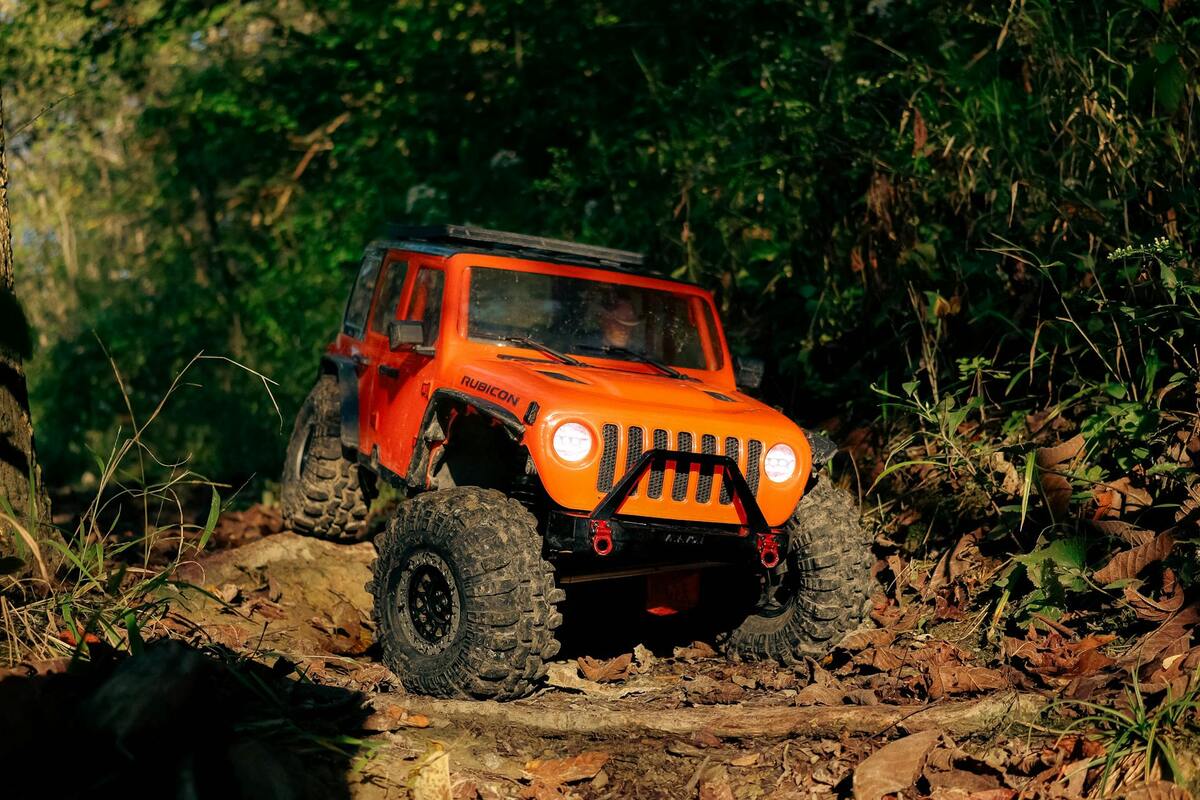
One of you wrote in a while back. Getting back into the hobby after a long break, replacing a dead battery on an SCX24, and asking about going 3S for more speed and a bit more range so there’s less walking across the yard to fetch the truck when it stalls out at the far end of a run.
I want to be upfront about something before we go further: I haven’t run 3S myself. This isn’t a build log. A reader asked a real question, and rather than guess, I went and dug into what 3S actually requires on the SCX24 and TRX4M, what the community that has done it actually reports, and whether it solves the problem he was trying to solve. That’s what this guide is. I’d rather tell you what I found doing the homework than invent a bench test I never ran.
If you’ve been wondering the same thing, here’s the honest answer.
The Myth to Kill First: 3S Buys Speed, Not Runtime
This is the mix-up at the center of almost every “should I go 3S” question, and it’s worth untangling before anything else.
Cell count (2S vs 3S) is a voltage question. A 2S LiPo pack is 7.4V nominal. A 3S pack is 11.1V nominal. More voltage means the motor spins faster for the same throttle input, which means more speed and more punch. That’s what 3S gets you.
Runtime is a capacity question, measured in mAh. A 2000mAh pack runs longer than a 1000mAh pack, full stop, regardless of whether it’s 2S or 3S. If you want a truck that goes longer between charges, the lever is capacity, not cell count.
There’s a small wrinkle worth naming honestly: a same-mAh 3S pack can sometimes yield a bit more runtime than the equivalent 2S pack, because the motor isn’t working as hard to produce the same output. But that’s a secondary effect, not the main event, and it’s nowhere near enough to justify a 3S conversion if runtime is your actual goal.
So if your goal is “more speed and less walking to fetch the truck,” decode that into what it actually needs: speed comes from voltage or a brushless combo, and range comes from mAh. Neither of those requires 3S. Keep that in your back pocket, because it changes the rest of this conversation.
Going 3S on the SCX24: The Can of Worms
Here’s the part that catches people, and it’s the load-bearing warning of this whole guide: the stock SCX24 ships with a brushed ESC rated for 1S-2S. Feed it a 3S pack and it does not gracefully underperform. It fails, often immediately, sometimes with visible smoke. Builders on RCCrawler and elsewhere report this consistently enough that it isn’t a maybe. You cannot “just add a cell” to a stock SCX24.
That means a 3S SCX24 build is not a battery swap. It’s a full power-system rebuild:
- ESC: the brushed unit has to go. You need a brushless ESC rated for 2S-3S.
- Motor: the stock brushed ESC can’t run a brushless motor anyway, so the motor comes out at the same time. Combo systems (motor and ESC sold as a matched pair) are the practical path here, the same way they are for a 2S brushless conversion on this platform. If you haven’t already read that guide, it’s worth doing first regardless of cell count, since brushless is a prerequisite either way.
- Transmission gears: the SCX24’s stock plastic gears are a known weak point once you add real power. Brushless and 3S together tend to strip them. Hardened-steel gears become less of an upgrade and more of a prerequisite.
- Gearing: the community consensus for big-motor or 3S builds leans toward overdrive gearing, roughly 1.5:1, to keep the added power usable instead of just heat and wheelspin. Crawler gearing basics covers what these ratios actually mean if the terminology is new to you.
- Battery fit: a 3S pack physically has to fit the SCX24’s tiny battery tray, which is a real constraint, not a footnote. Some builders modify the tray to make it work.
And here’s the part I want to be straight about: the community is genuinely split on whether this is even worth it on a 1/24-scale truck. One camp runs 3S brushless for maximum punch and enjoys the build for its own sake. The other camp argues the platform is happier, more reliable, and just as fun on a good 2S brushless setup, and that 3S on something this small is more heat and more wear than the terrain actually calls for. I’m not going to pretend there’s a clean consensus here, because there isn’t. The Brushless Question goes deeper into the case for waiting on brushless in general, and most of that reasoning applies double once 3S enters the picture.
For a reader whose actual goal is “get a working battery and get back on the trail,” 3S on the SCX24 is a deep-end enthusiast project. It’s not step one, and honestly, it might not be a step you need to take at all.
Going 3S on the TRX4M: The Saner Host (Still Not Simple)
If 3S is genuinely the goal, the TRX4M is the better platform to pursue it on. It’s a bigger 1/18-scale truck with a more robust drivetrain and more physical room for electronics and battery than the SCX24 has. See SCX24 vs TRX4M for the full comparison if you haven’t already picked a platform.
One data point worth sitting with: even Traxxas’s own brushless upgrade for the TRX4M, the 6250 Brushless Power System, is engineered for 2S. That’s the manufacturer’s own answer to “how much power should this truck run,” and it’s 2S, not 3S. Aftermarket 3S-capable systems exist for the TRX4M, built by the same brands doing SCX24 micro brushless work, but they’re add-on enthusiast kits, not the stock upgrade path. If you’re upgrading the TRX4M’s motor at all, TRX4M motor upgrade covers what that swap actually involves and what else you need alongside it.
Same voltage-vs-runtime logic applies here as on the SCX24. Same LiPo handling rules apply too. The TRX4M just has more headroom to absorb the extra power without the drivetrain cascade you’d hit on the SCX24.
SCX24 vs TRX4M for 3S: If You’re Going to Do It
Head-to-head, if you must run 3S, do it on the TRX4M. Less cascade, more room, a platform that was built to take a hit.
But step back and ask the more useful question first: do you actually need 3S at all? For most riders the honest answer is no, and it’s worth reading Do You Actually Need a Bigger Crawler? if part of what’s pulling you toward 3S is really the itch to go bigger and faster in general rather than a specific, named problem with your current truck. A lot of upgrade decisions turn out to be about the itch, not the truck.
The LiPo Safety Reality
Worth addressing directly, because it matters to a lot of returning riders: if part of why you’re back in this hobby is wanting something you can run without your kids handling battery packs, that’s a legitimate reason to be careful here, and I don’t want to wave it off.
The good news is that 3S isn’t categorically scarier to handle than 2S. The rules are the same: don’t puncture a pack, don’t discharge it past the safe cutoff, store it at storage voltage between sessions, charge it somewhere you can see it. A 3S pack has one more cell and more stored energy than a 2S pack, which means it deserves the same respect a little more consistently applied, not a different set of precautions. LiPo care and storage covers the full 30-second version of these rules if you want the complete picture; I won’t re-teach it all here.
If the real goal is a hard wall against kids ever handling a pack, that’s a storage-and-habit question (a LiPo-safe bag, packs kept out of reach) rather than a chemistry question. NiMH isn’t really a viable option at micro-crawler scale anymore, so the answer is adult discipline, not avoiding LiPo altogether.
What I’d Actually Do, for His Goals
Here’s where the research lands, for a reader whose stated goals were: get back on the trail, a bit more speed, less walking to fetch a stalled truck.
Skip 3S for now. It solves a speed problem you may not fully have yet, and it doesn’t solve the runtime problem at all. Instead:
- Replace the dead pack with good 2S packs at a higher mAh than stock. This is the direct fix for “more runtime.” Best LiPo batteries for the SCX24 and TRX4M covers what to look for and what fits.
- If speed is still the thing you want after that, add a 2S brushless combo. It gets you real speed and better low-end control without touching the drivetrain risk that comes with 3S. Best SCX24 upgrades has the priority order if you’re starting from stock.
- Leave 3S on the shelf as the “someday I want a rocket” project, not the “get back out there” fix. If you get to a point where 2S brushless feels like the ceiling and you’re genuinely chasing more power for its own sake, that’s a real and valid reason to go build the 3S version. It’s just not where this starts.
The Honest Cost Breakdown
| Path | What’s involved | Approximate cost |
|---|---|---|
| 3S SCX24 full build | Brushless 2S-3S combo (Furitek Stinger Brushless Power System for SCX24, Micro KMD 3450Kv motor + Lizard PRO 30A/50A ESC) + hardened-steel SCX24 transmission gears + overdrive gearing + 3S pack(s) that fit the tray | $150-200+ |
| 3S TRX4M build | Brushless 2S-3S combo (Furitek Monster Brushless Power System for TRX4M, Greyhound 1410 7500Kv motor + Lizard PRO 30A/50A ESC) + 3S packs; steel diff gears are a common add | ~$130-180 |
| Smart-money 2S path | Higher-mAh 2S packs now, optional 2S brushless combo later for speed | ~$60-80 |
Prices above are approximate and can shift; check the linked listings for current pricing. If you want the fuller picture of what a year of this hobby costs beyond any single upgrade decision, What This Hobby Actually Cost Me in Year One has the real numbers.
A note on sourcing: the parts named in this guide (Furitek’s Stinger and Monster brushless systems, hardened-steel SCX24 transmission gears) are real, purpose-built products for these platforms, linked above.
Write In
That’s the honest version of the 3S question, for one reader and for anyone else weighing the same upgrade. If you’re sitting on a question like this, one that a Reddit thread half-answers and half-argues about, write in. That’s genuinely how this guide happened.
See also: SCX24 vs TRX4M · SCX24 Brushless Motor and ESC Upgrade · TRX4M Motor Upgrade · Crawler Gearing Basics · LiPo Care and Storage · Best LiPo Batteries for the SCX24 and TRX4M · Best SCX24 Upgrades · The Brushless Question · Do You Actually Need a Bigger Crawler? · What This Hobby Actually Cost Me in Year One
This page contains affiliate links. If you purchase through these links, I may earn a small commission at no additional cost to you. I only recommend gear I actually use.
Ready to buy?
See my curated gear picks for this platform and others — organized by upgrade priority.
Browse Recommended Gear →